
Course:
Physical Education Form 1 (035)

Physical Education
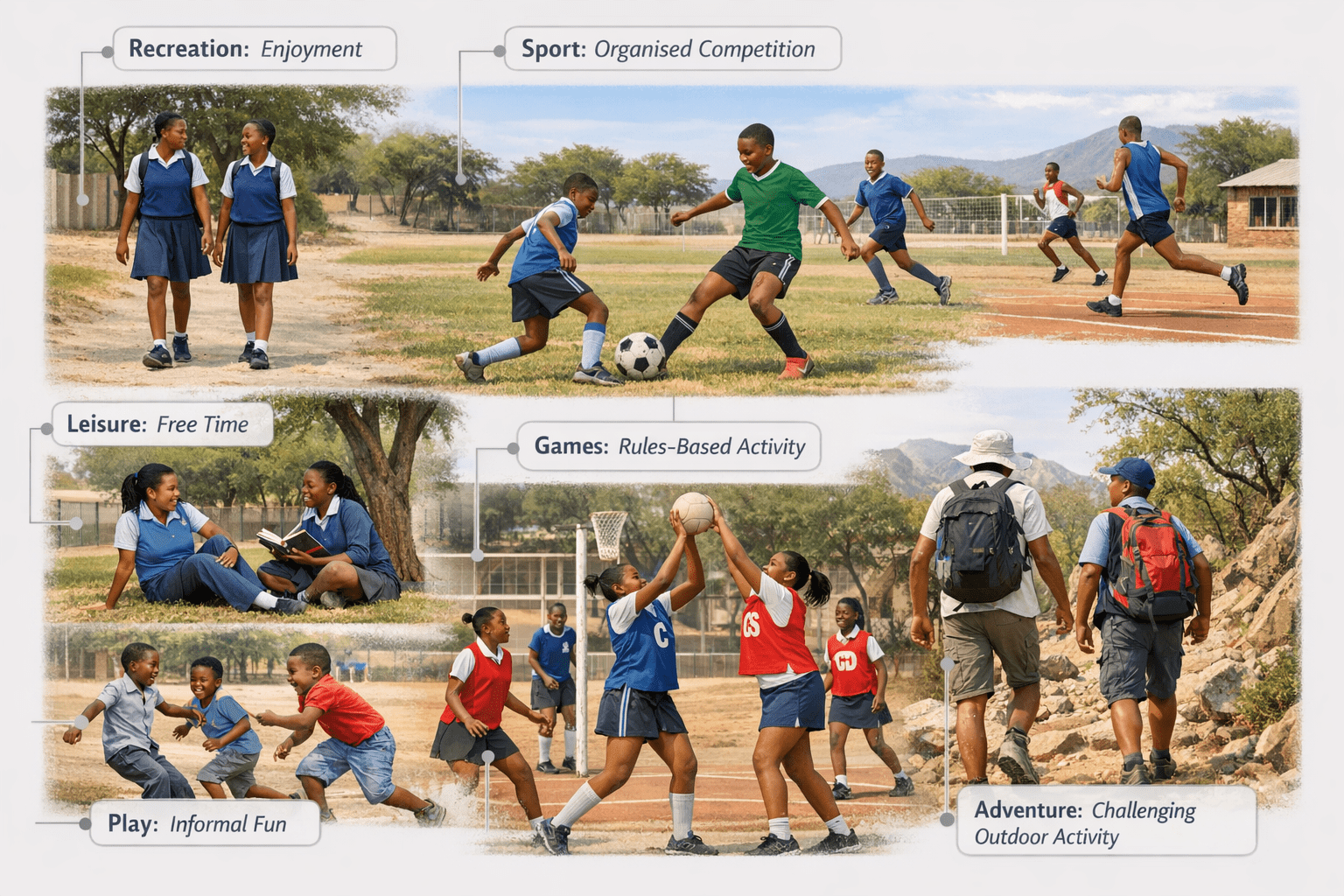
Recreation
Leisure
Sport
Play
Games
Adventure activities
Technology
Career
This lesson introduces learners to Physical Education (P.E) and its role in developing a healthy and active lifestyle. Learners will understand the meaning of P.E, its components, and how different physical activities are classified.
The lesson also explores the impact of technology on physical activity and highlights the benefits and career opportunities associated with Physical Education.
Physical Education (P.E) is a subject that involves physical activities designed to improve:
Physical fitness
Health
Movement skills
Social and emotional development
It focuses on learning through movement and activity, not just theory.
Physical Education includes different types of activities:
Activities done for enjoyment and relaxation
Examples: walking, playing for fun
Free time when a person is not working or studying
Organised and competitive physical activities
Examples: football, athletics
Informal activities done for fun, especially by children
Structured activities with rules and objectives
Examples: team games like netball
Activities involving challenge and risk
Examples: hiking, camping
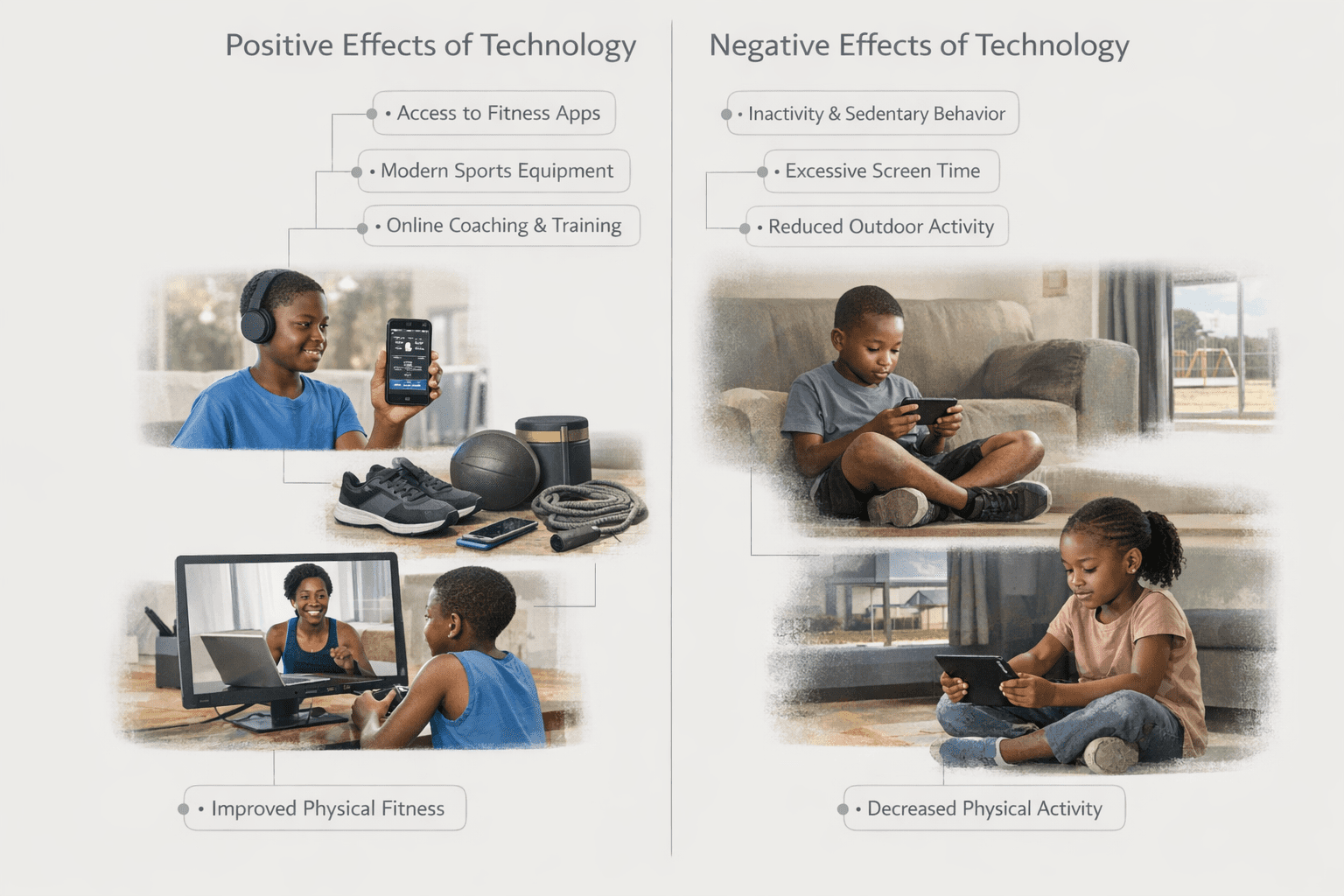
Access to fitness programmes and apps
Improved sports equipment
Online training and coaching
Reduced physical activity
Increased screen time
Less outdoor participation
Learners should balance technology use with active lifestyles.
Physical Education helps learners:
Improve physical fitness and health
Develop teamwork and cooperation
Build confidence and discipline
Reduce stress
Learn important life skills
A career is a job or profession that a person trains for and does over a long period of time.
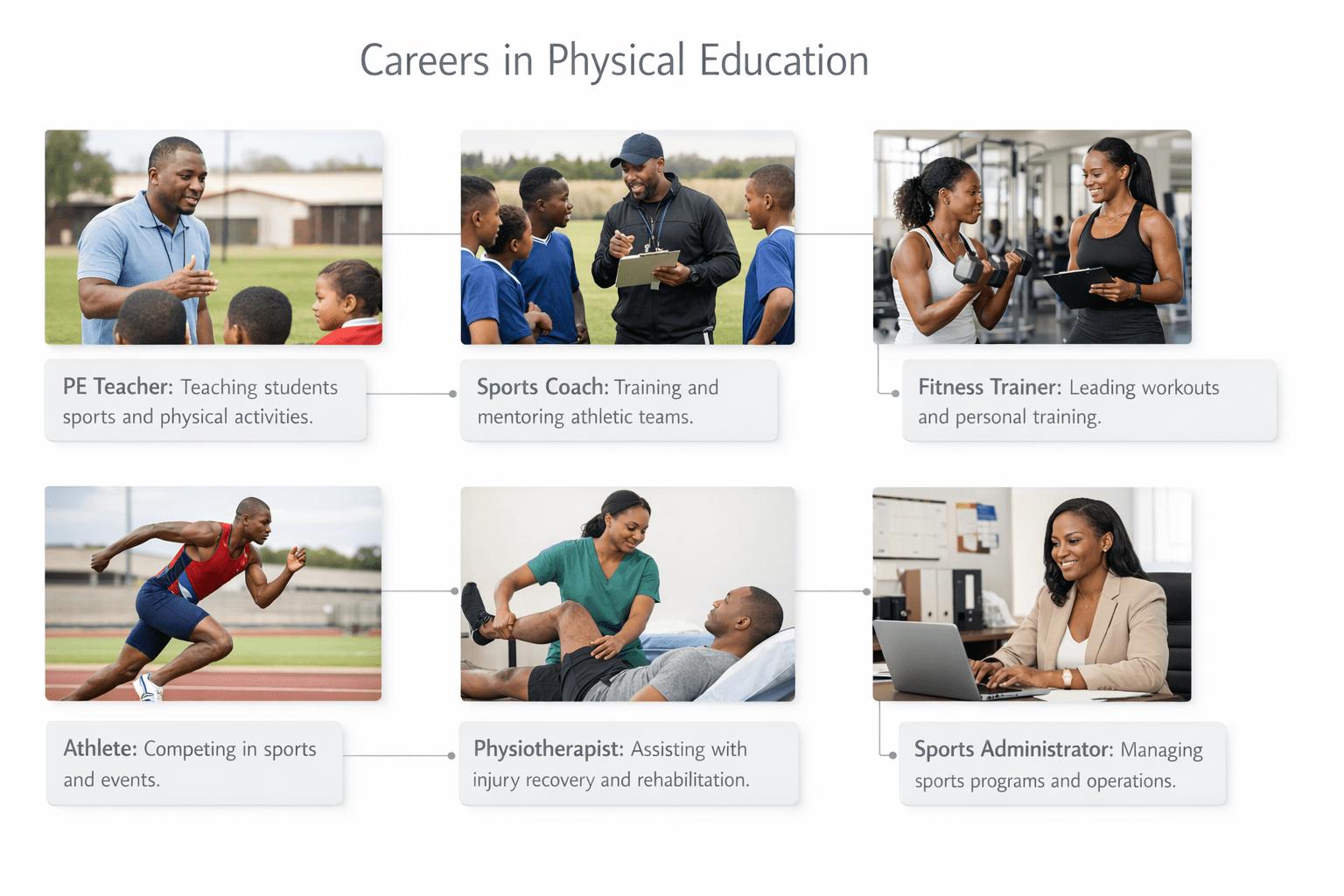
Physical Education can lead to careers such as:
Physical Education teacher
Sports coach
Fitness trainer
Professional athlete
Sports administrator
Physiotherapist
Physical Education can be both a lifestyle and a profession.
Question: What is Physical Education?
Answer: It is a subject that uses physical activity to improve fitness and health.
Question: Give one component of Physical Education.
Answer: Sport.
Question: What is the difference between play and sport?
Answer: Play is informal, while sport is organised and competitive.
Question: Give one negative effect of technology on physical activity.
Answer: Reduced physical activity.
Question: What is a career?
Answer: A job or profession done over a long time.
Question: Name one career in Physical Education.
Answer: Sports coach.
Physical Education involves learning through physical activity
It includes recreation, leisure, sport, play, games, and adventure activities
Technology affects physical activity positively and negatively
Physical Education promotes health, fitness, and life skills
It also offers various career opportunities

