
Course:
Social Studies Form 1 (015)

Map reading is the ability to understand and interpret information shown on a map. Maps represent real places using symbols, colours, scales and directions. By learning how to read maps, students can identify physical features, calculate distances, locate places using coordinates and understand relationships between different locations.
Maps are used in many fields such as geography, transport, environmental management and urban planning. In Social Studies, map reading helps learners understand spatial relationships and geographical patterns.
Developing map reading skills enables learners to interpret geographical information correctly and apply this knowledge in real-life situations and examinations.
Map
Map attributes
Map scale
Map key / legend
Direction
Latitude and longitude
Grid reference
Physical features
Sketch maps
Geographical Information Systems (GIS)
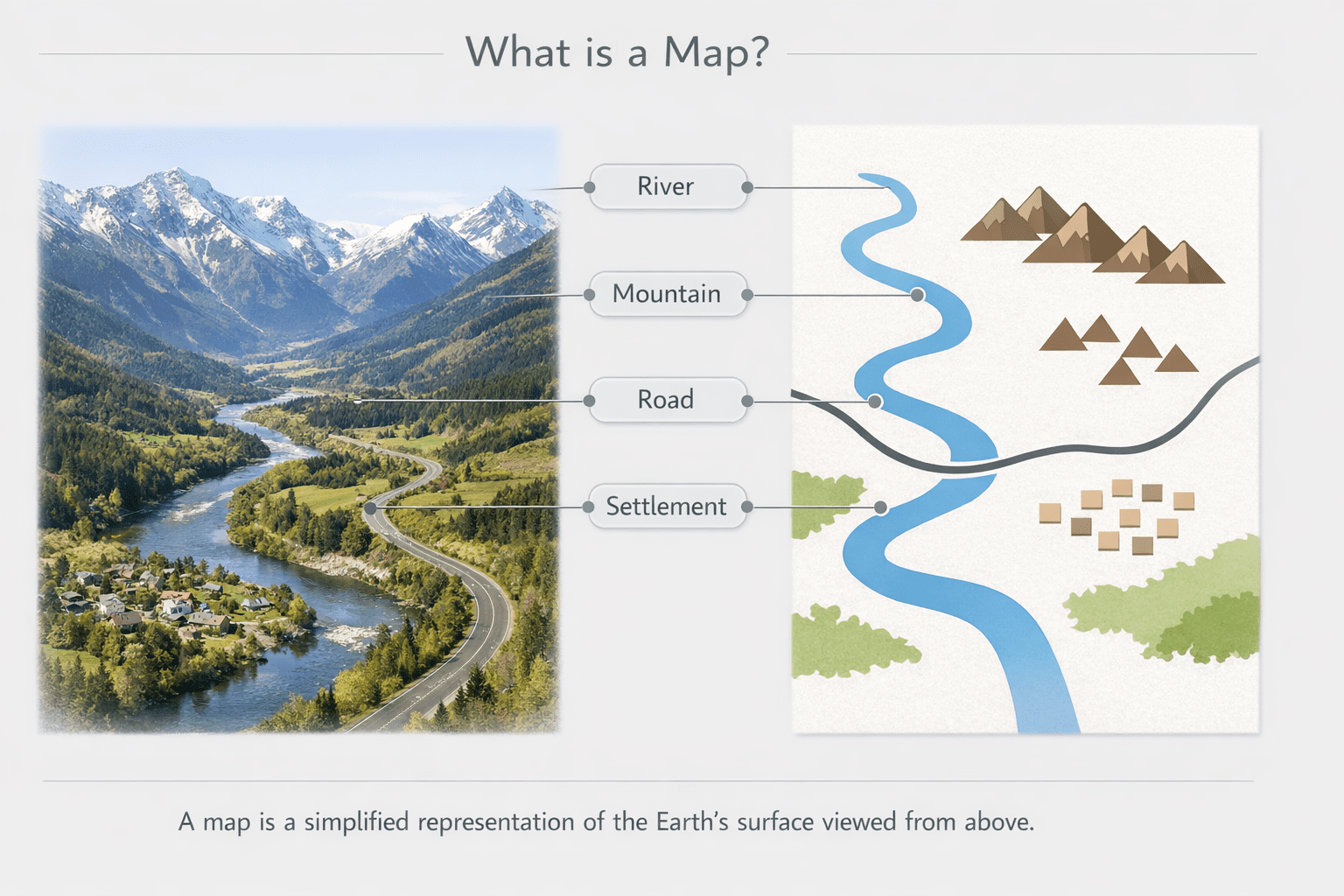
A map is a drawing or representation of the Earth’s surface or part of it, shown from above and reduced to a smaller scale.
Maps show important information such as:
rivers
mountains
roads
settlements
boundaries
vegetation
Maps help people understand locations and relationships between places.
Examples of how maps are used include:
finding directions between places
planning towns and roads
studying natural resources
identifying countries and cities
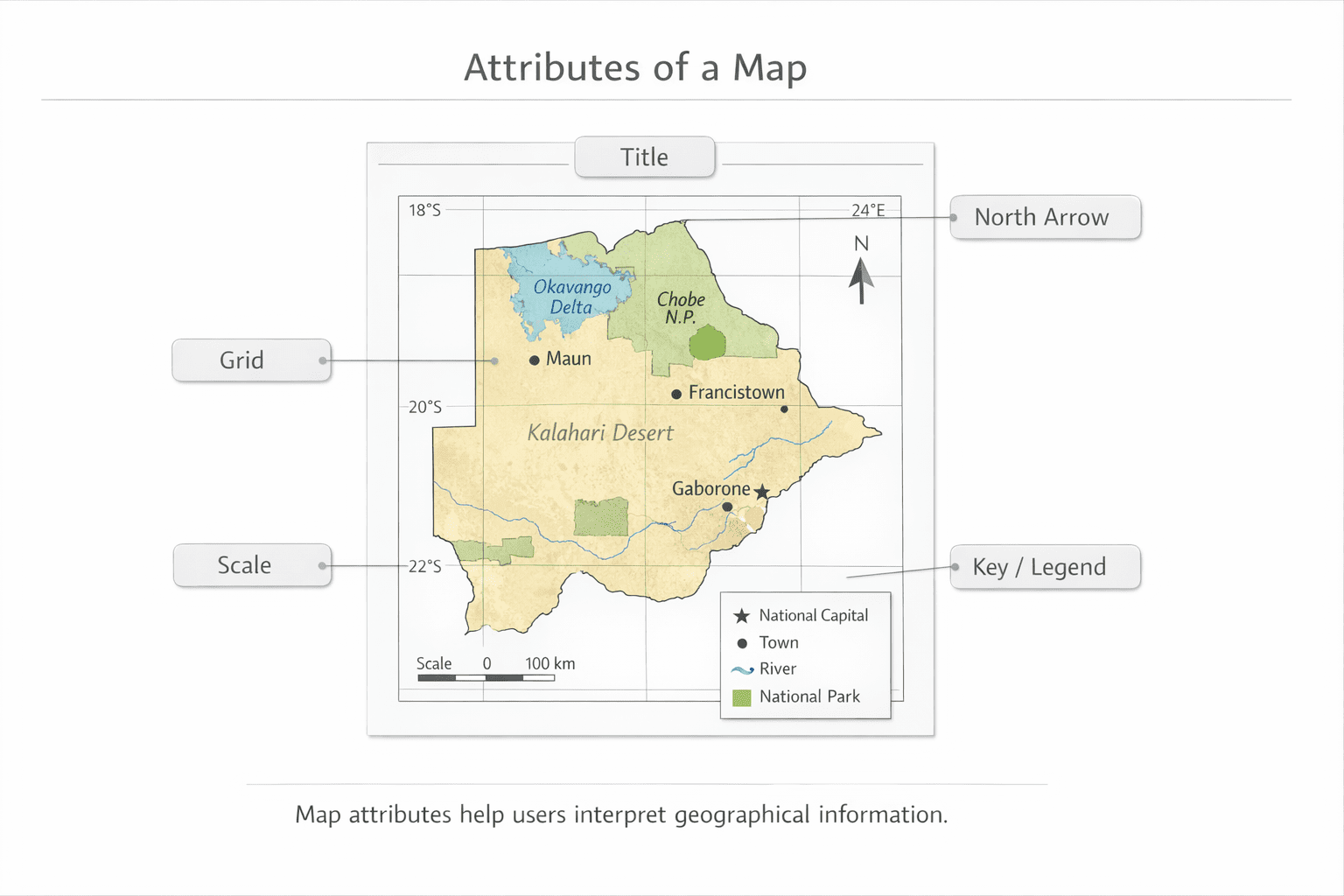
Maps contain important components called map attributes, which help users interpret the information shown.
The main attributes include:
The title tells the reader what the map shows.
Example:
“Map of Africa” or “Vegetation Map of Botswana”
The scale shows the relationship between distance on the map and distance on the ground.
Example:
1 cm on the map = 10 km on the ground.
The key explains the meaning of symbols used on a map.
Example:
River → blue line
Mountain → triangle
Town → dot or square
Maps usually include a north arrow or compass showing directions.
The four main directions are:
North
South
East
West
Some maps contain grid lines or coordinates to help locate places accurately.
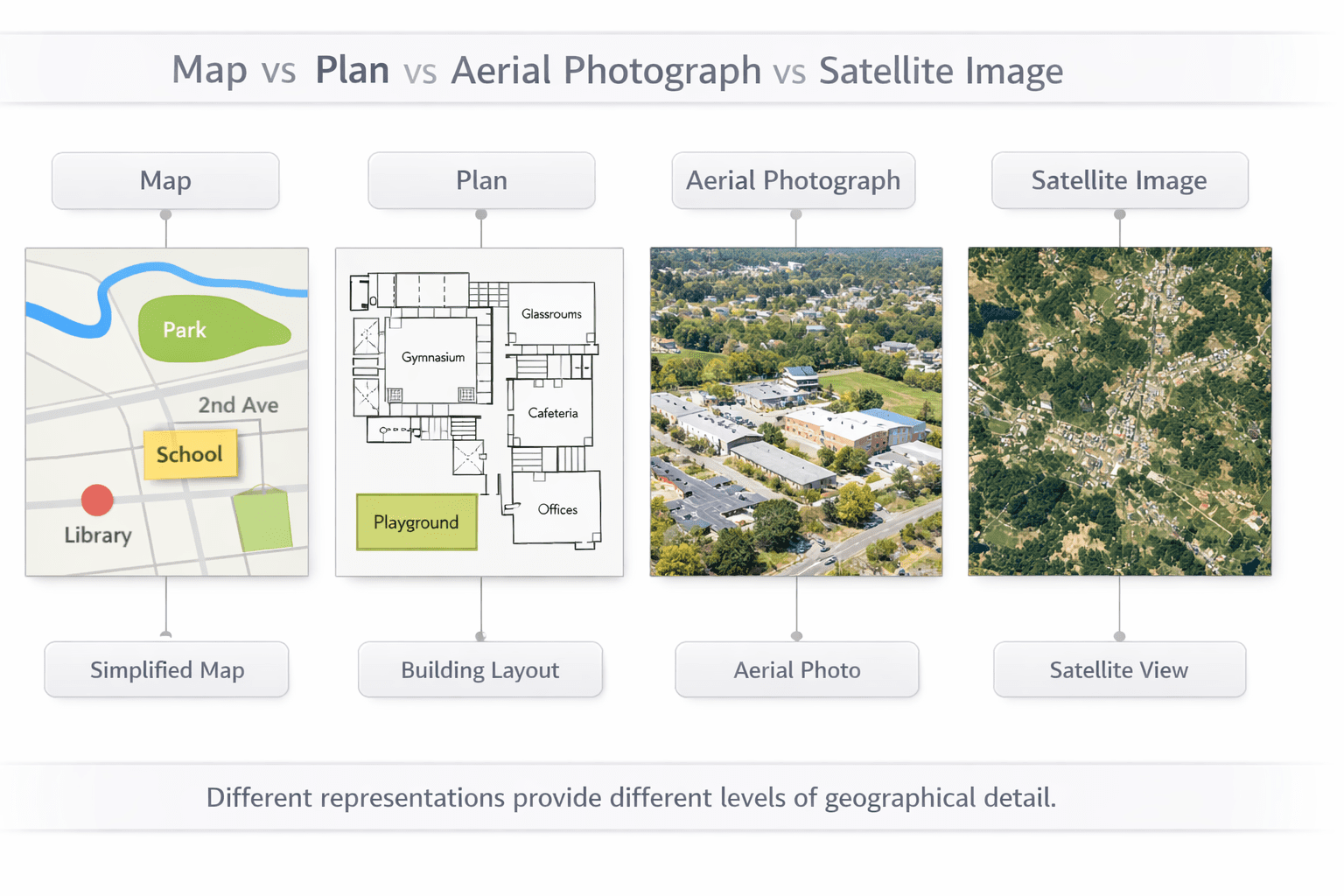
A map is a simplified drawing showing selected features using symbols.
A plan shows a small area in great detail.
Examples include:
a classroom plan
a building plan
a town layout
An aerial photograph is a picture taken from an aircraft showing the actual appearance of the ground.
A satellite image is a photograph taken from space using satellites.
Satellite images are commonly used for:
weather monitoring
environmental observation
disaster management
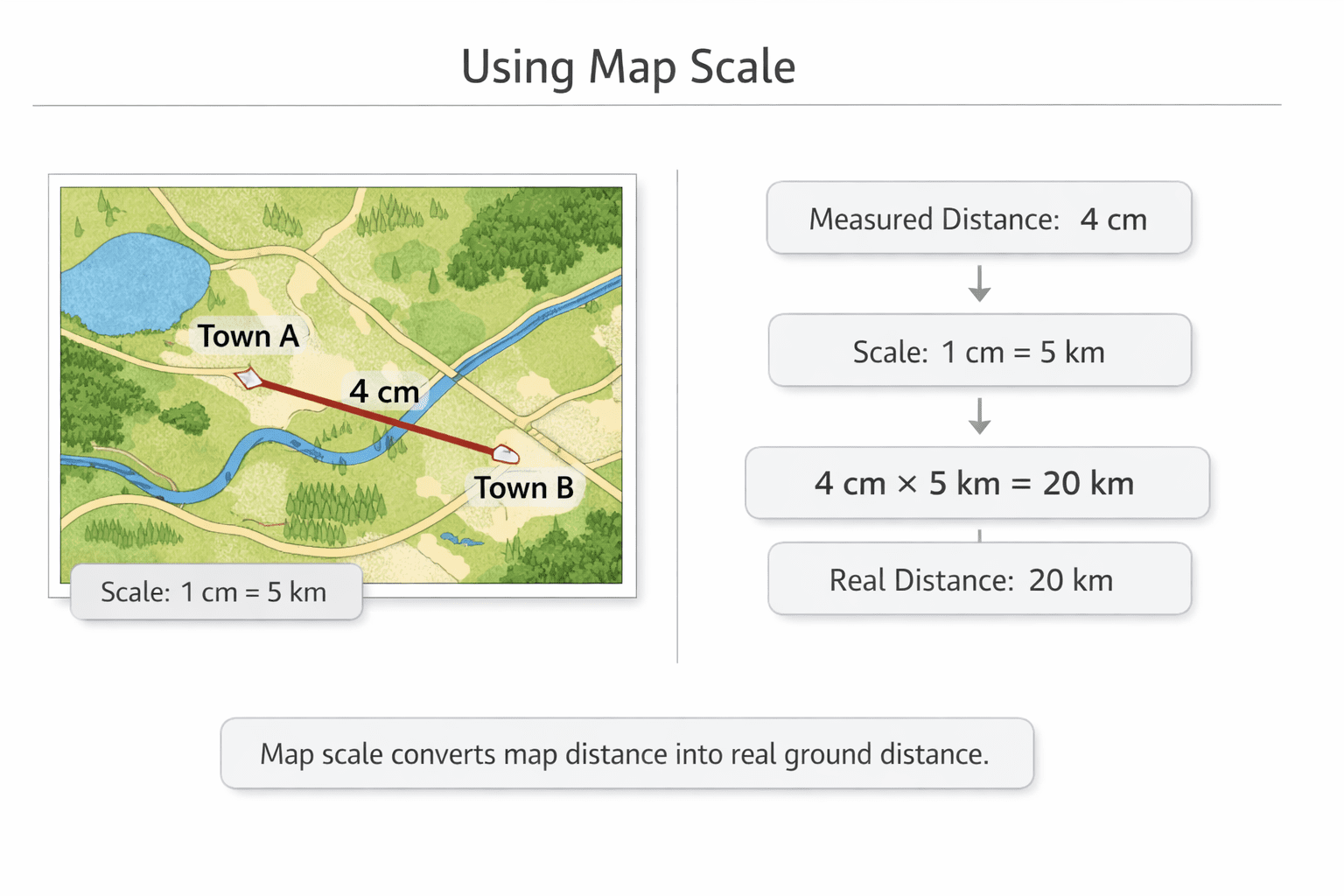
Scale allows us to calculate real distances between places.
Example:
Scale:
1 cm = 5 km
Distance on map = 4 cm
Ground distance:
4 × 5 km = 20 km
Therefore the real distance is 20 kilometres.
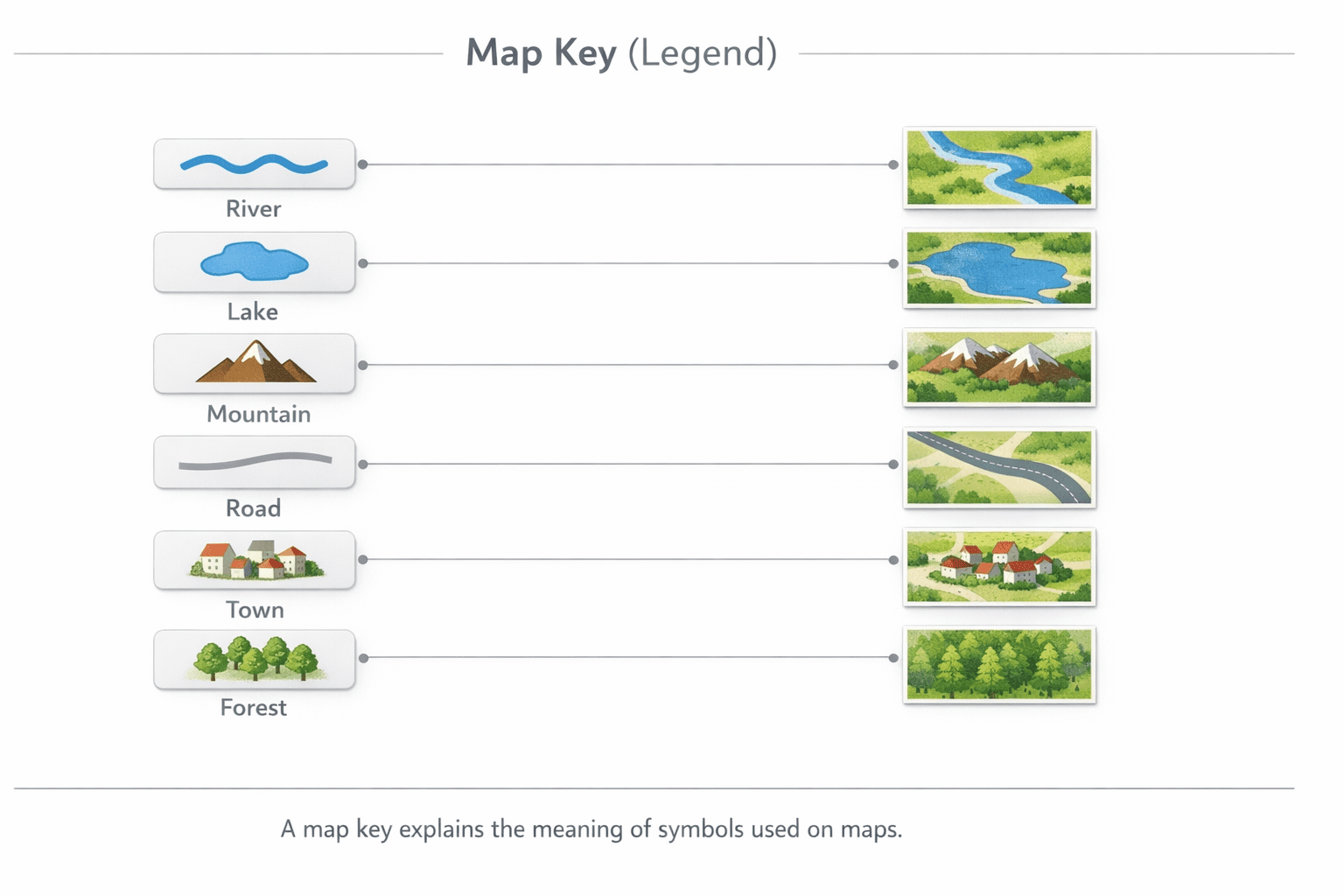
A map key explains symbols used on the map.
Examples of map symbols include:
River
Lake
Mountain
Road
Town
Forest
Without a key, it would be difficult to understand what the symbols represent.
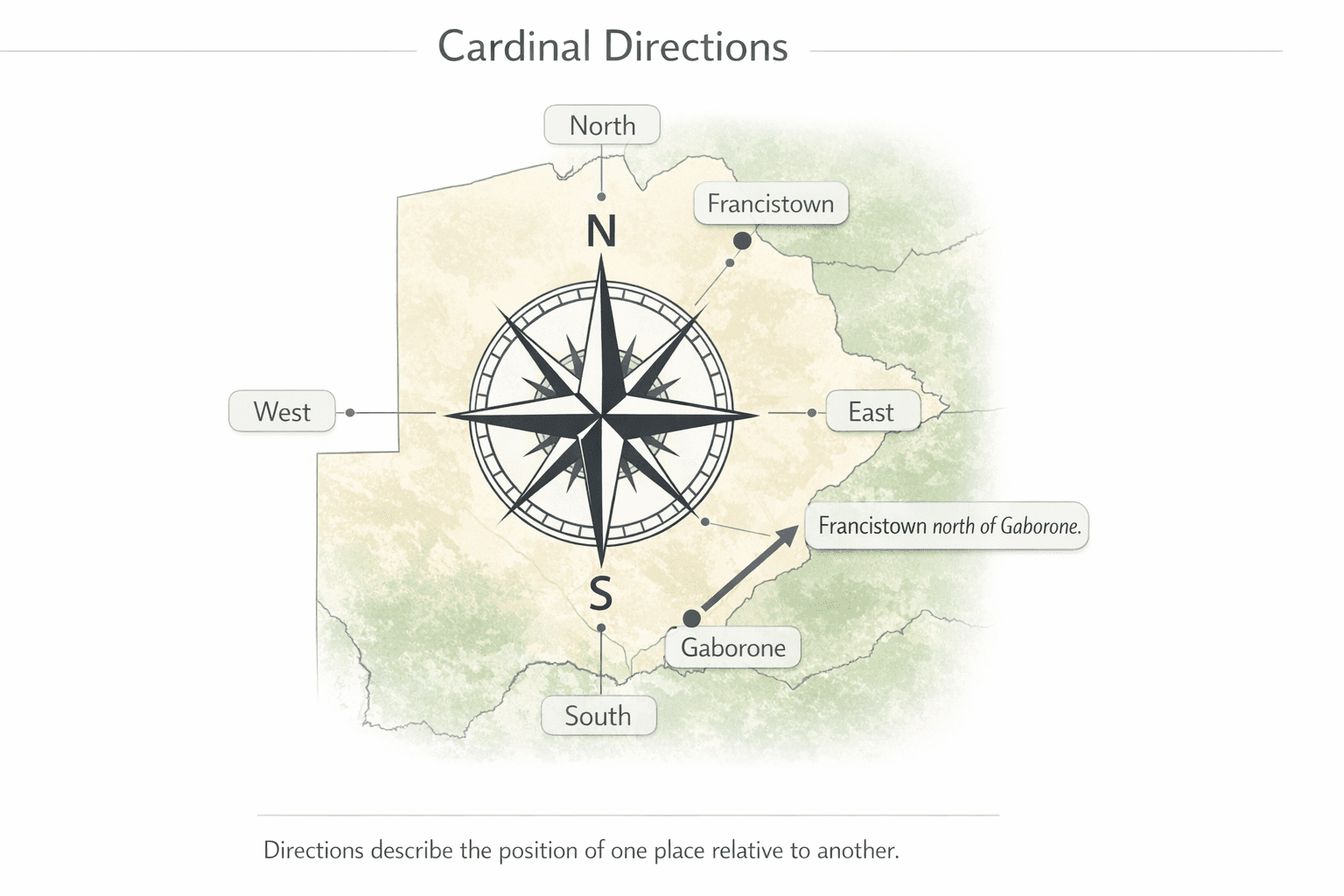
Directions describe the location of one place relative to another.
Main directions:
North (N)
South (S)
East (E)
West (W)
Example:
Francistown lies north of Gaborone.
Maps normally include a north arrow to show orientation.
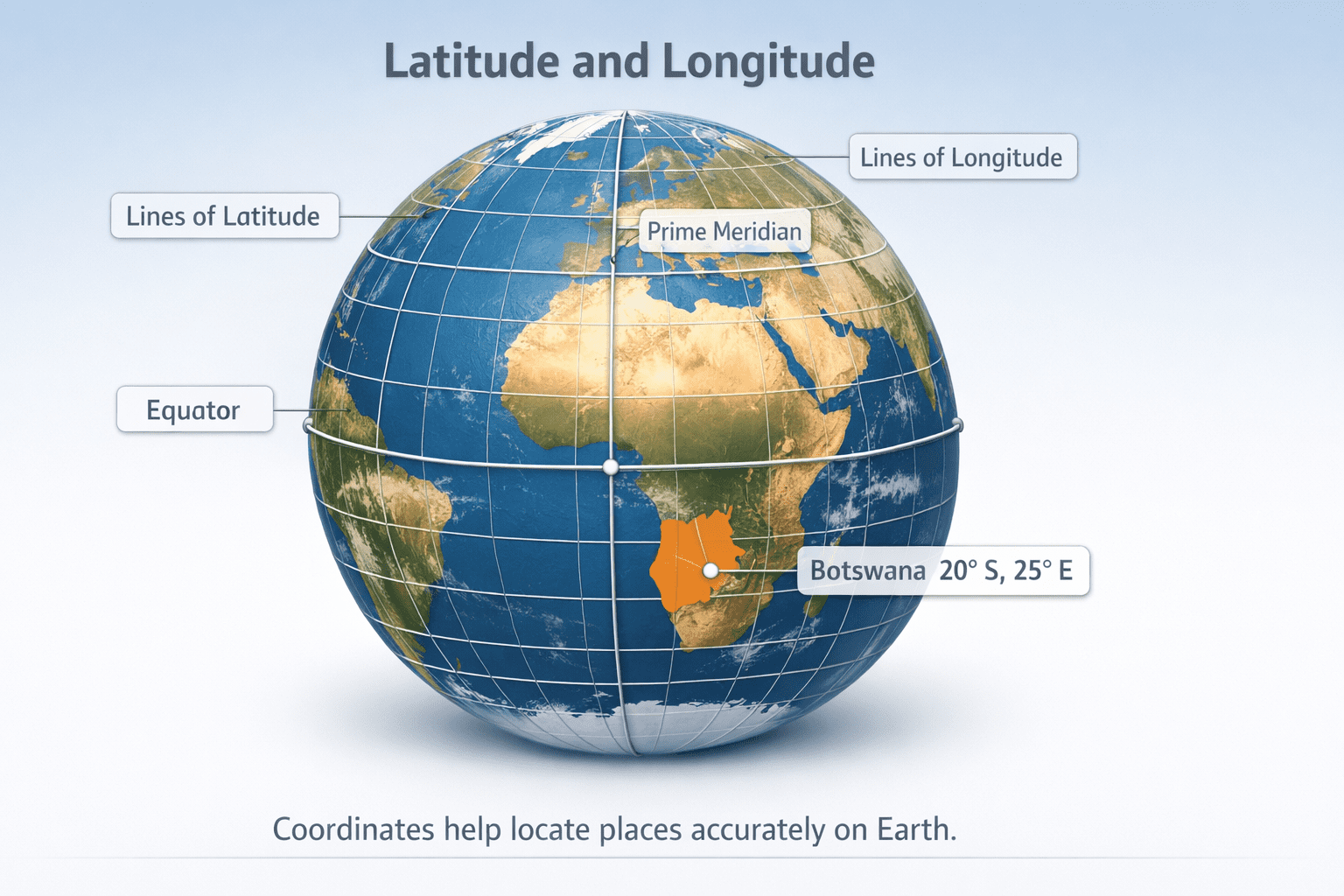
Latitude measures distance north or south of the Equator.
The Equator is 0° latitude.
Example: Botswana lies around 20° South.
Longitude measures distance east or west of the Prime Meridian.
Example: Botswana lies around 25° East.
Grid references help locate places precisely on maps.
Steps:
Read the easting (horizontal number) first
Read the northing (vertical number) second
Example:
3245
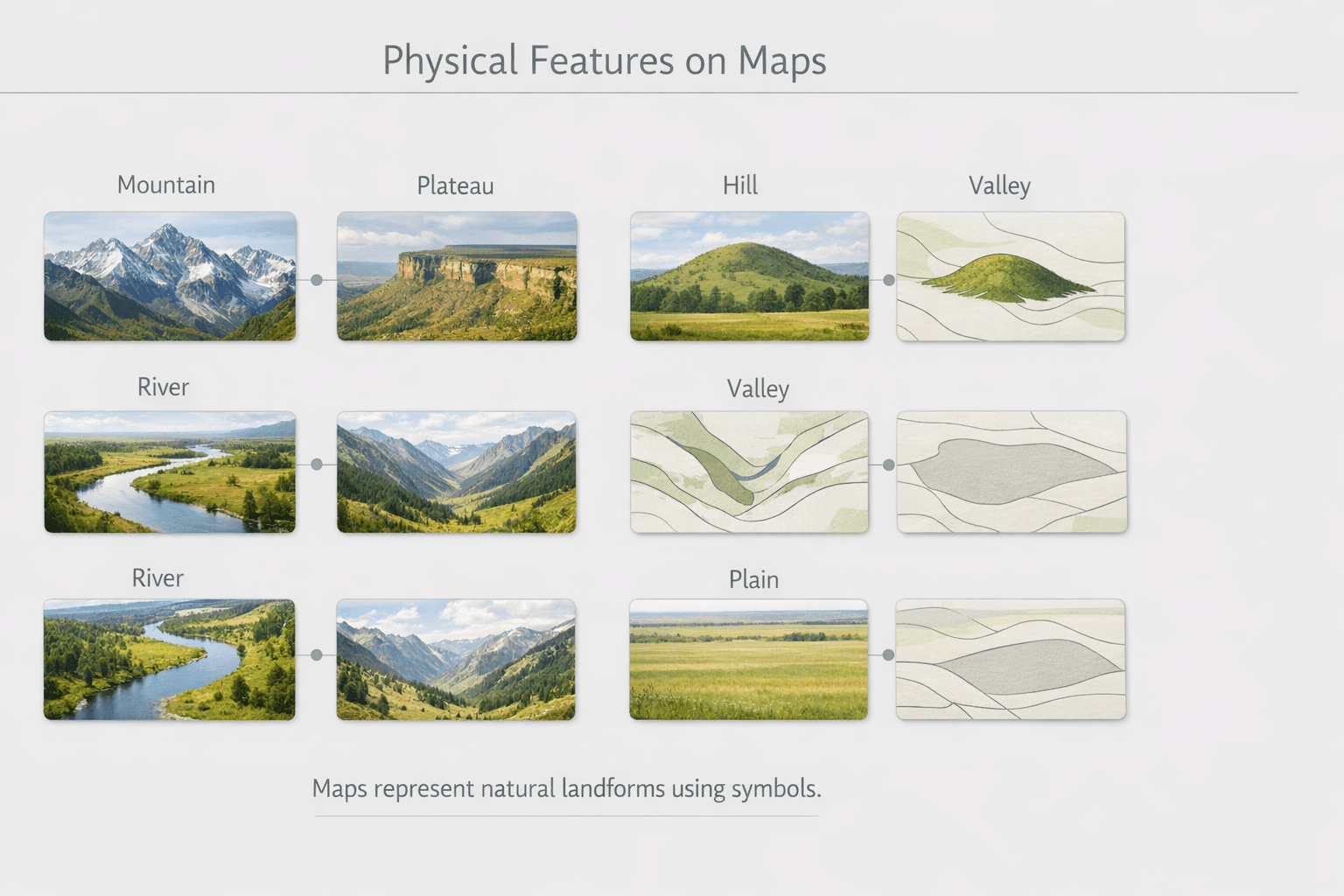
Maps represent natural landforms such as:
Rivers
Mountains
Hills
Cliffs
Plateaus
Depressions
Flatlands
These features help people understand the environment and landscape of an area.
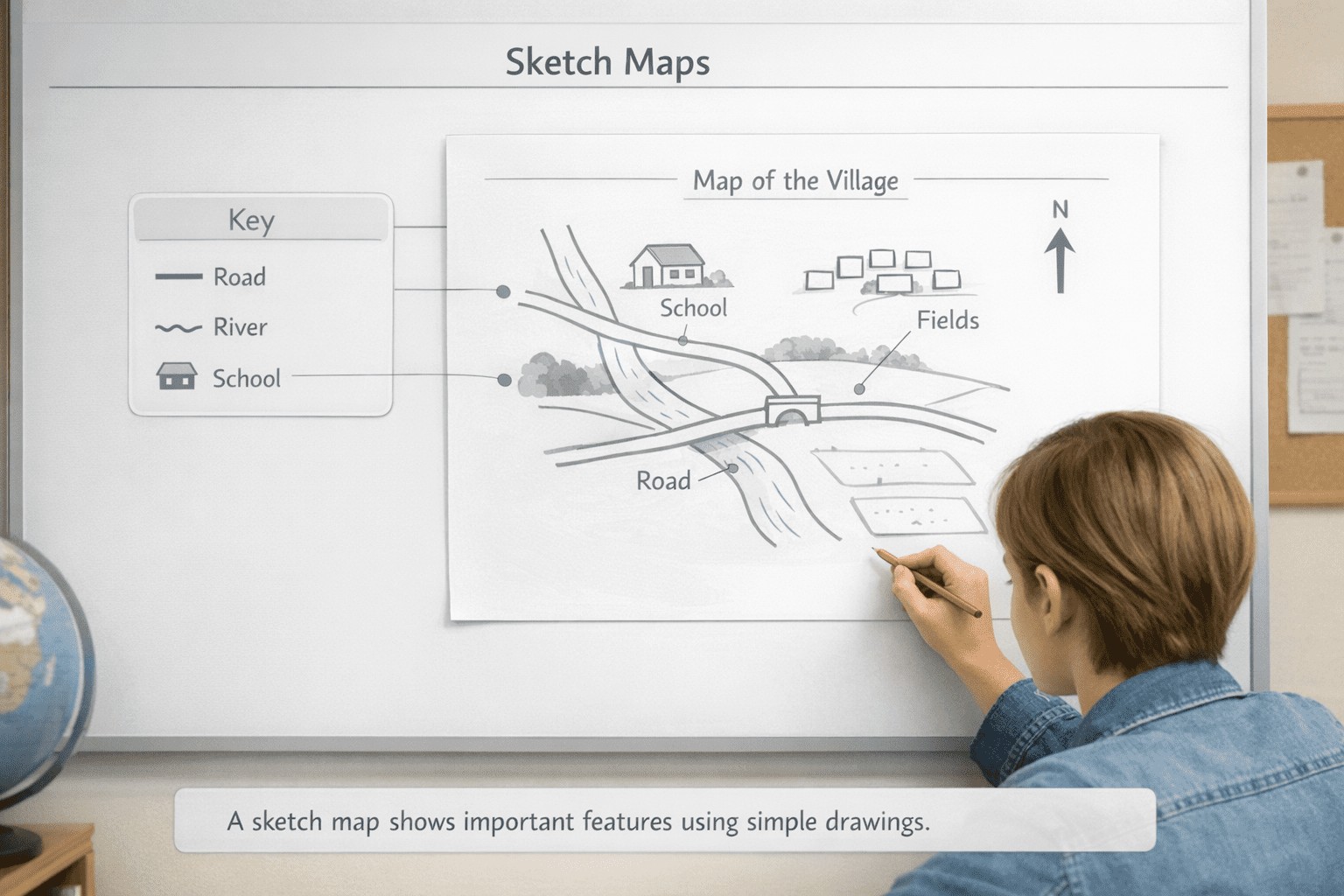
A sketch map is a simple drawing showing important features of a place.
Sketch maps normally include:
Title
Key
Direction (north arrow)
Important features
Sketch maps are useful when describing locations or explaining routes.
GIS is a computer system used to collect, analyse and display geographical information.
GIS is used in:
town planning
environmental management
disaster response
agriculture
Many modern digital maps such as Google Maps and GPS systems use GIS technology.
JCE examinations often test map reading skills such as:
identifying features on a map
calculating distance using scale
locating places using latitude and longitude
interpreting map symbols and keys
For example, students may be required to identify features such as rivers, deserts, mountains or climatic regions from a map.

