
Course:
Agriculture Form 1 (016)

Agriculture
Food security
Economic development
Sustainability
Productivity
Environment
Agribusiness
This lesson introduces learners to the concept of agriculture and its importance in Botswana. It explores how agriculture contributes to social and economic development, examines the impact of HIV & AIDS on productivity, and evaluates environmental effects of agricultural practices.
Learners will also understand how agriculture relates to other subjects and identify its major branches.
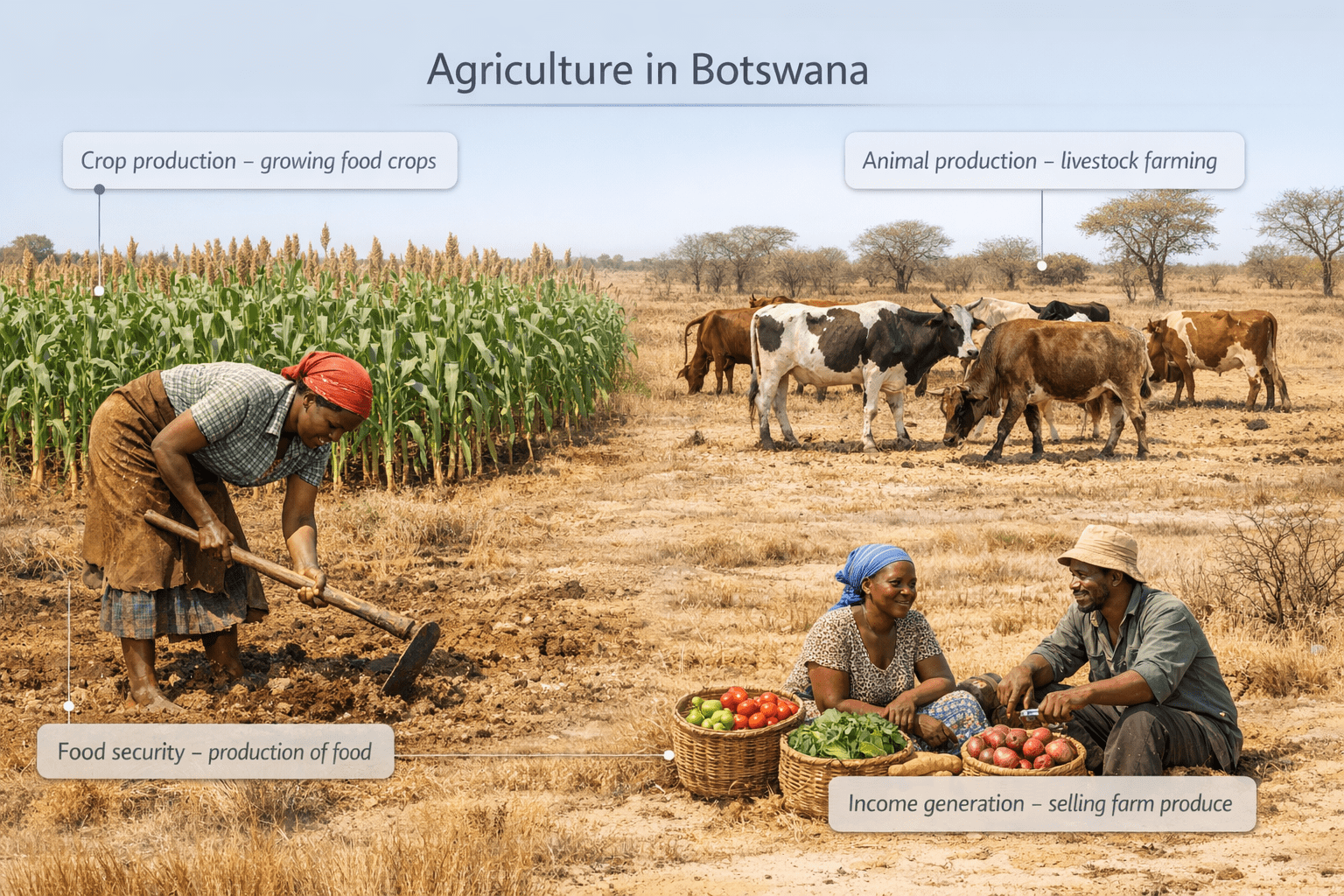
Agriculture is the science and practice of cultivating crops and rearing animals for food, income, and other useful products.
Provides food for families and communities
Supports rural livelihoods
Promotes cultural practices and traditions
Reduces poverty
Creates employment opportunities
Generates income for farmers
Contributes to national development
Supports industries (e.g. food processing)
Agriculture is critical for economic diversification, especially as Botswana reduces dependence on mining.
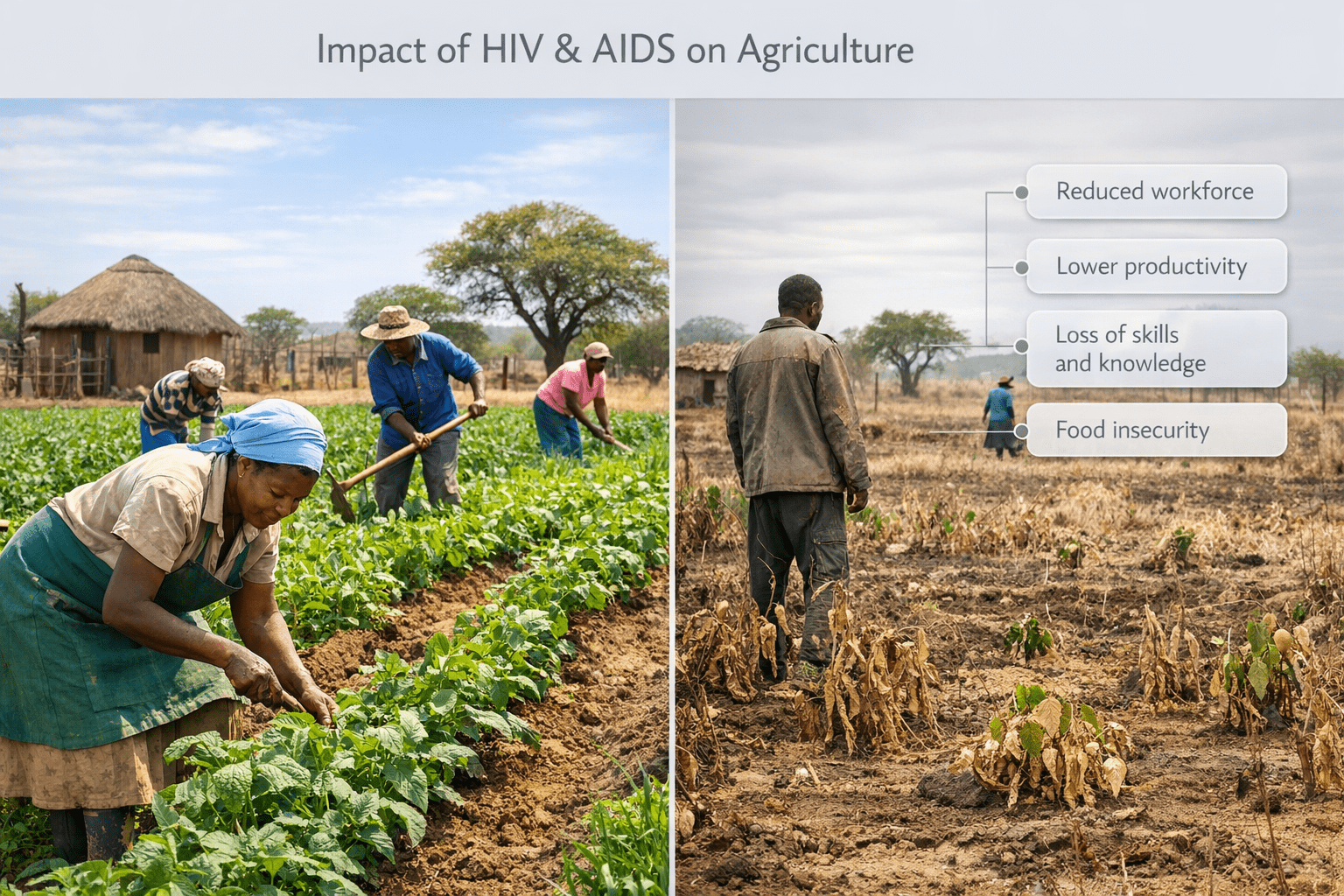
HIV & AIDS affects agriculture in several ways:
Reduces the workforce due to illness and death
Decreases productivity on farms
Increases dependency on fewer working individuals
Leads to loss of agricultural knowledge and skills
This results in lower food production and food insecurity.
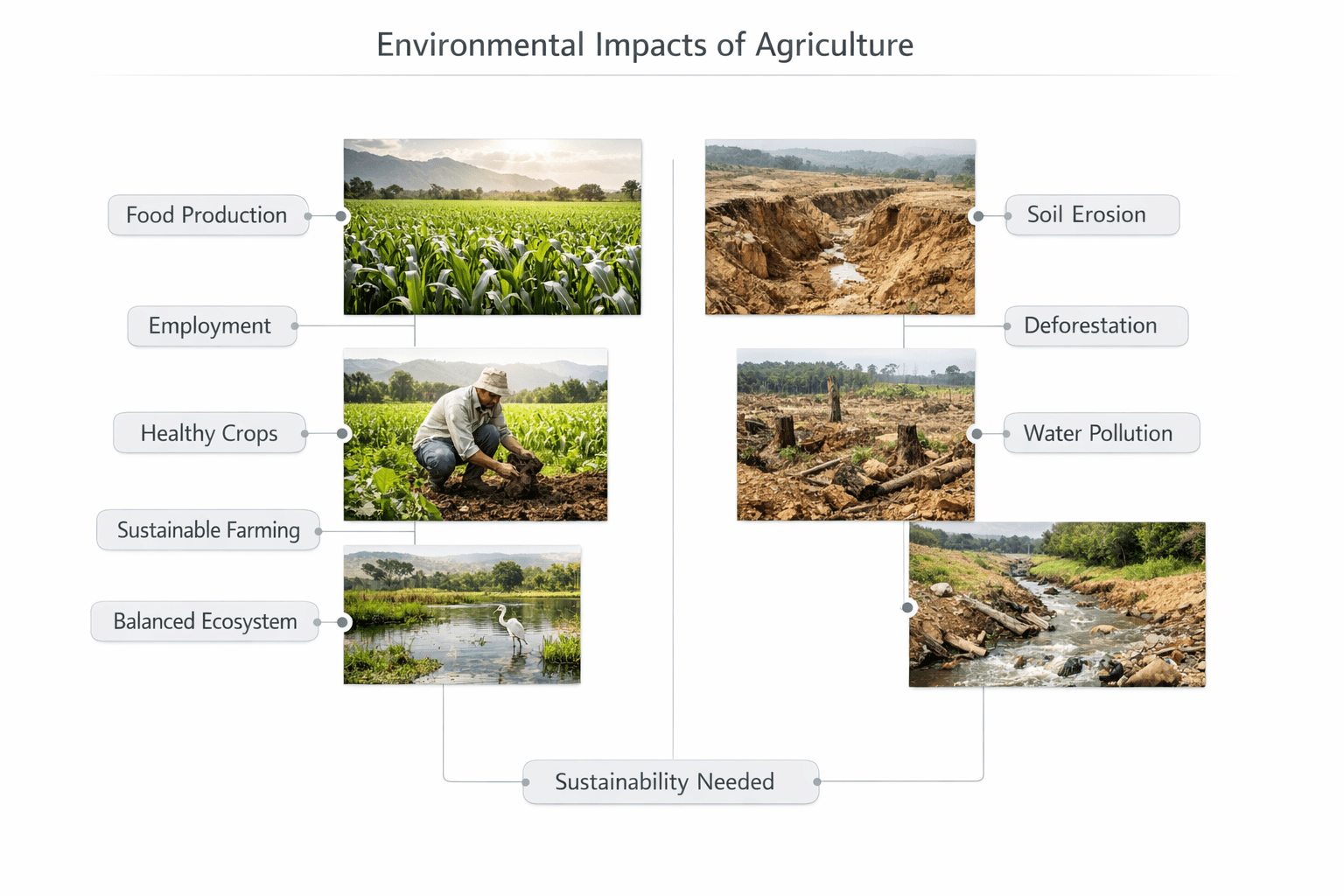
Food production
Employment creation
Soil erosion
Deforestation
Water pollution from chemicals
Loss of biodiversity
Sustainable farming practices are necessary to protect the environment.
Agriculture is interdisciplinary:
Biology → plant and animal growth
Geography → climate, soil, land use
Mathematics → measurements, calculations, budgeting
Business Studies → marketing, farm management
Science → soil chemistry, fertilizers
Agriculture applies knowledge from many subjects in real life.
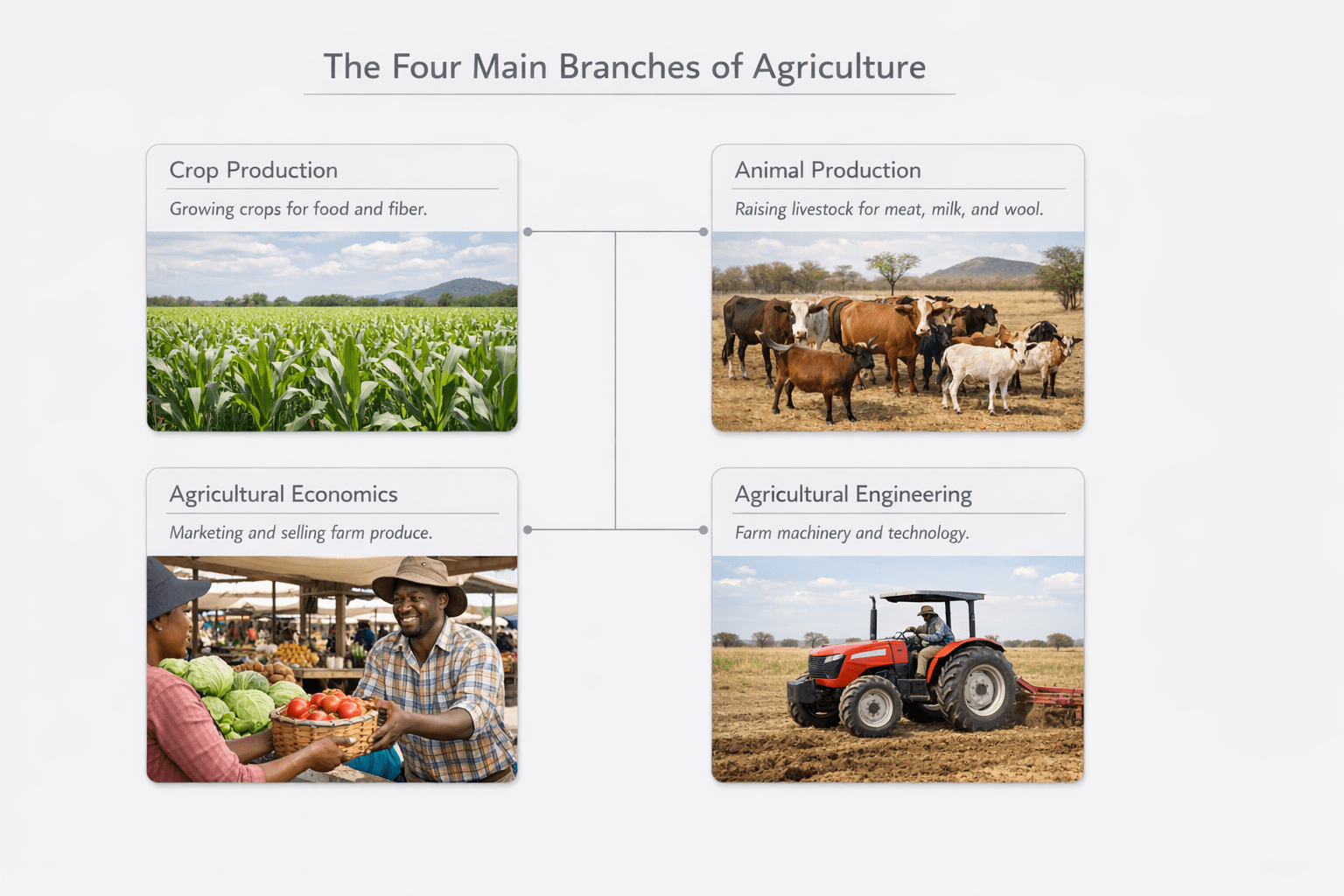
Growing crops such as maize, sorghum, and vegetables
Rearing livestock such as cattle, goats, and poultry
Managing agriculture as a business
Use of tools, machinery, and technology in farming
These branches work together to improve agricultural production.
Question: What is agriculture?
Answer: The practice of growing crops and rearing animals.
Question: Give one social importance of agriculture.
Answer: It provides food.
Question: Give one economic importance of agriculture.
Answer: It creates employment.
Question: How does HIV & AIDS affect agriculture?
Answer: It reduces the workforce and productivity.
Question: Name one environmental impact of agriculture.
Answer: Soil erosion.
Question: Name one branch of agriculture.
Answer: Crop production.
Agriculture involves crop and animal production
It is important for food, employment, and economic development
HIV & AIDS negatively affects agricultural productivity
Agriculture can impact the environment positively and negatively
It is related to many other subjects
It has different branches such as crop and animal production

