

Production
Direct production
Indirect production
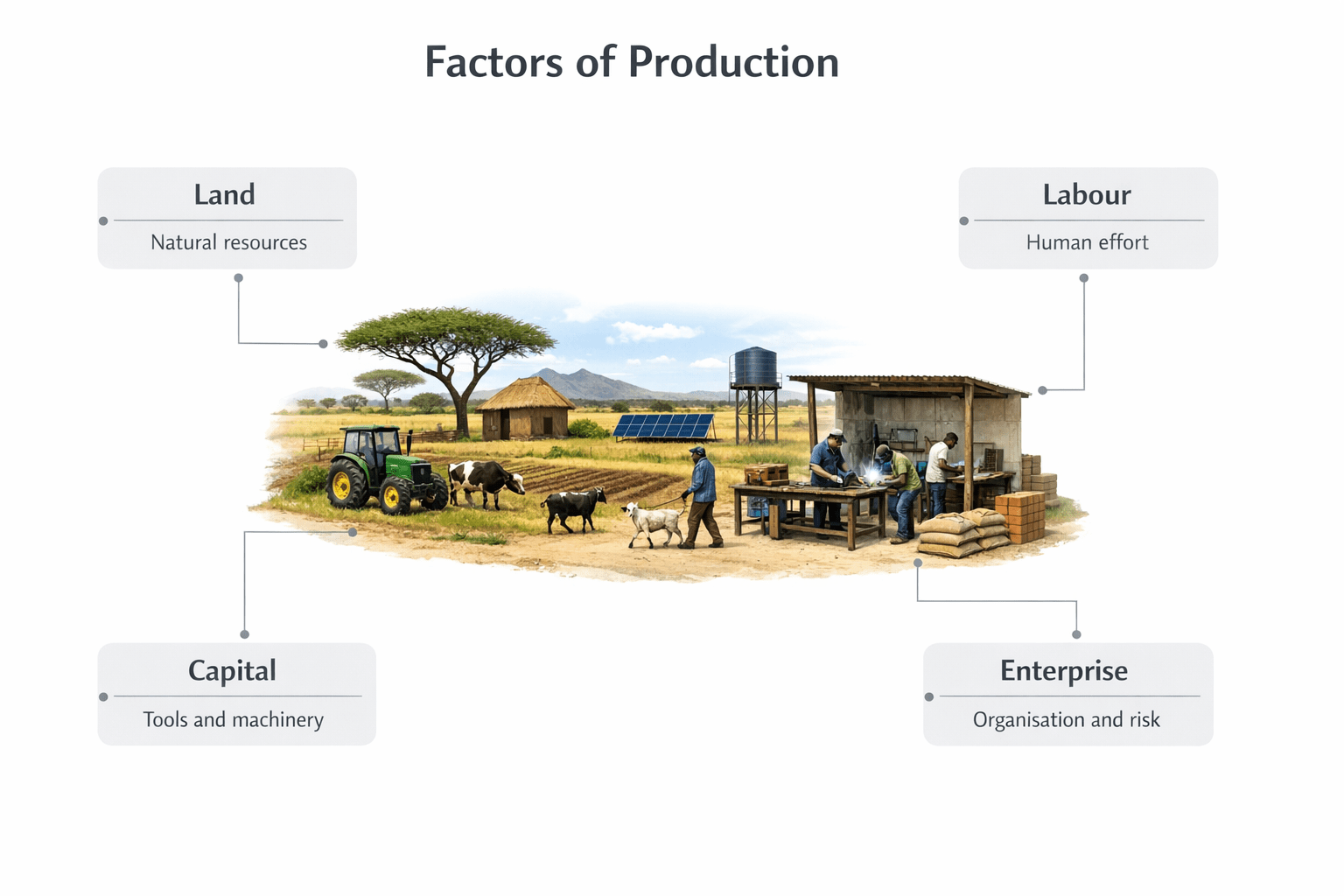
Factors of production
Land, Labour, Capital, Enterprise
Productivity
Sustainability
Chain of production
This lesson introduces production as the process of creating goods and services to satisfy human needs and wants. Learners will understand different types of production, the factors involved, and how these factors contribute to productivity.
The lesson also explores sustainability, the impact of health issues such as HIV and AIDS on labour, and the stages and chain of production.
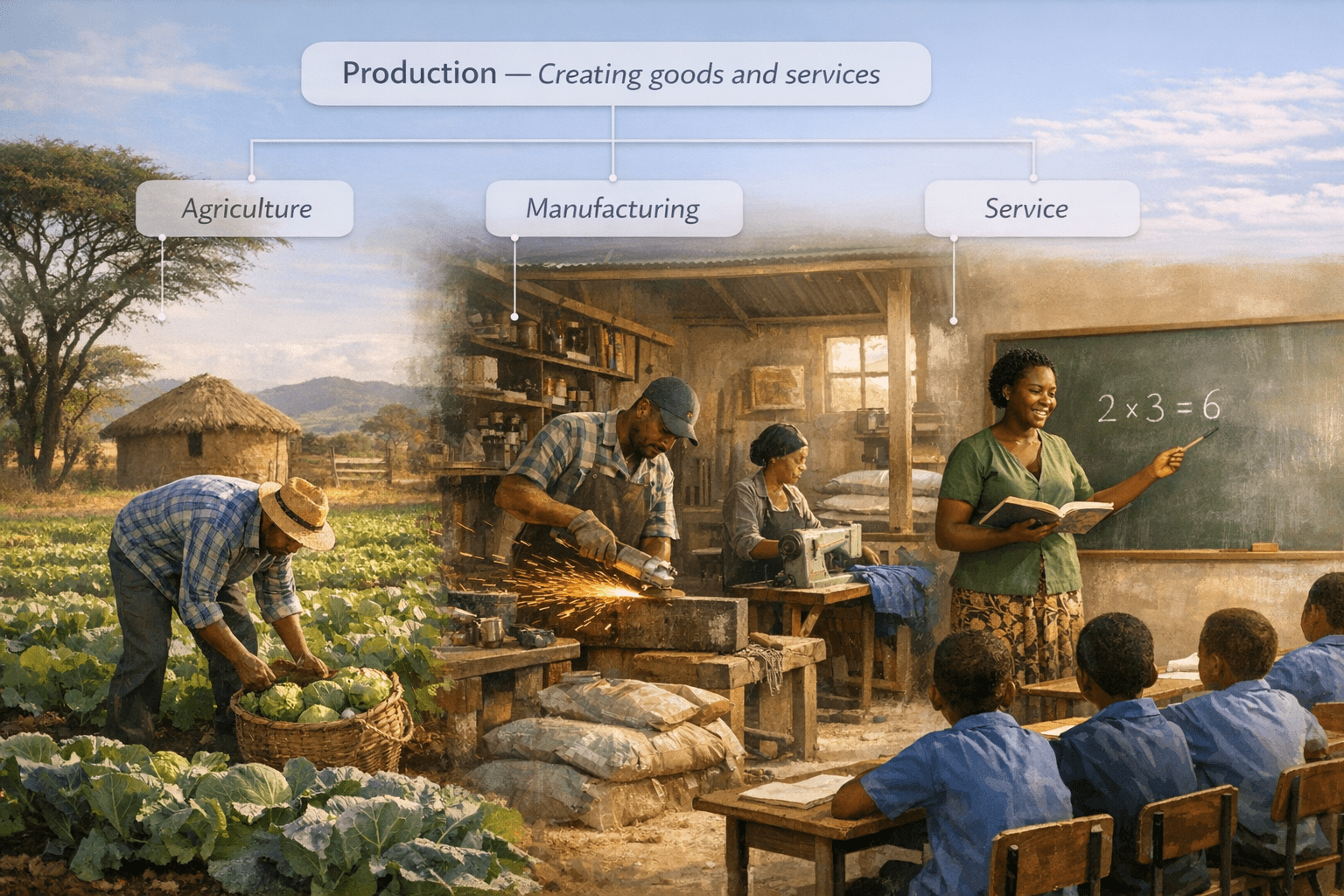
Production is the process of creating goods and services to satisfy human needs and wants.
Example:
A farmer growing maize is producing food.
Producing goods for personal use
Example:
A family growing vegetables for their own consumption
Producing goods for sale
Example:
A farmer selling crops at the market
Indirect production is the basis of commerce.
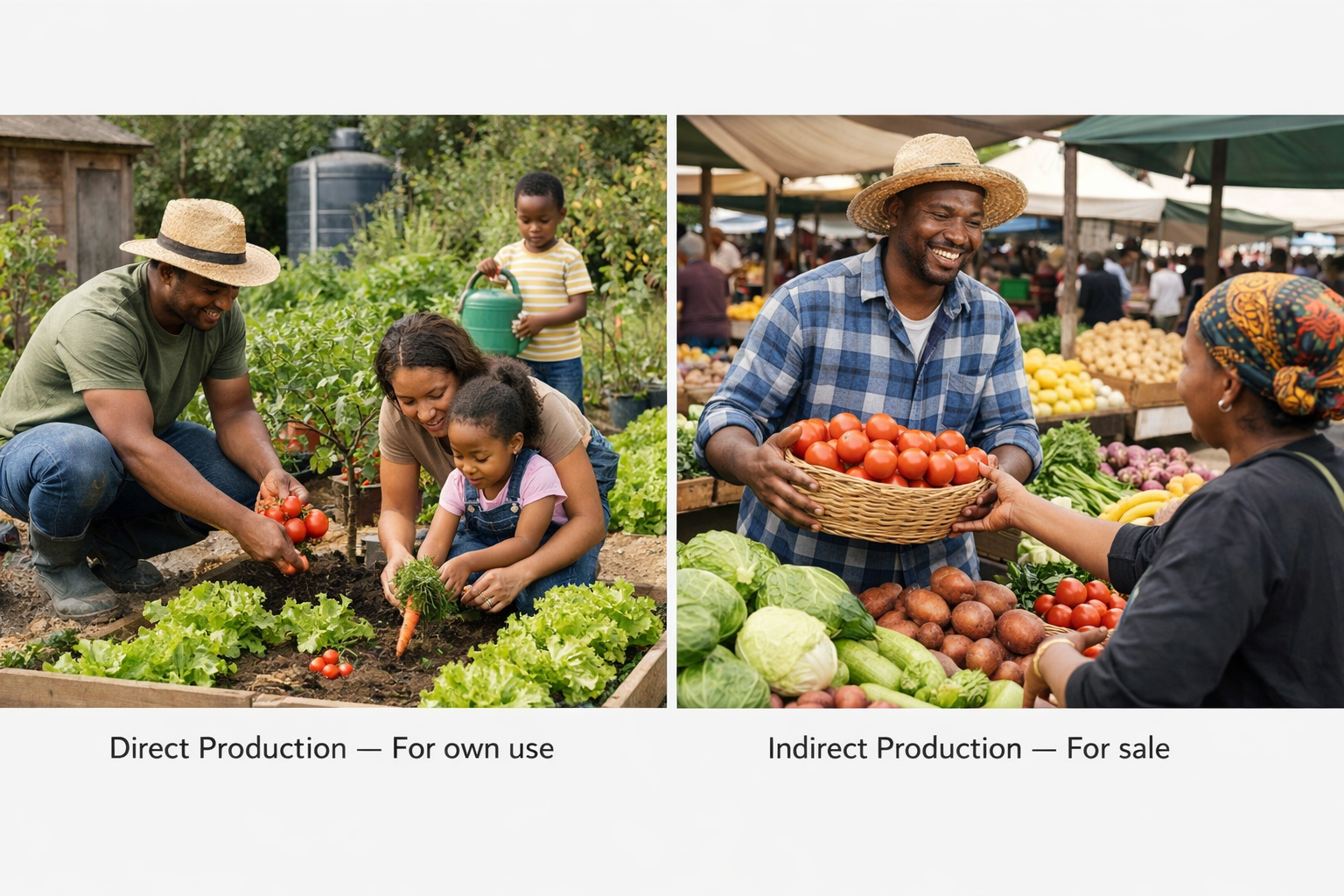
Direct production satisfies basic needs
Indirect production satisfies both needs and wants through trade
Production is essential for survival and economic activity.
There are four main factors of production:
Natural resources (soil, water, minerals)
Reward: Rent
Human effort (physical and mental work)
Reward: Wages
Tools, machinery, buildings
Reward: Interest
Organising and managing production
Taking risks
Reward: Profit
All factors must work together for production to occur.
Sustainability means using resources responsibly so they last for the future.
Conserving natural resources (land)
Protecting workers’ health (labour)
Maintaining machinery (capital)
Sustainable use ensures long-term productivity.
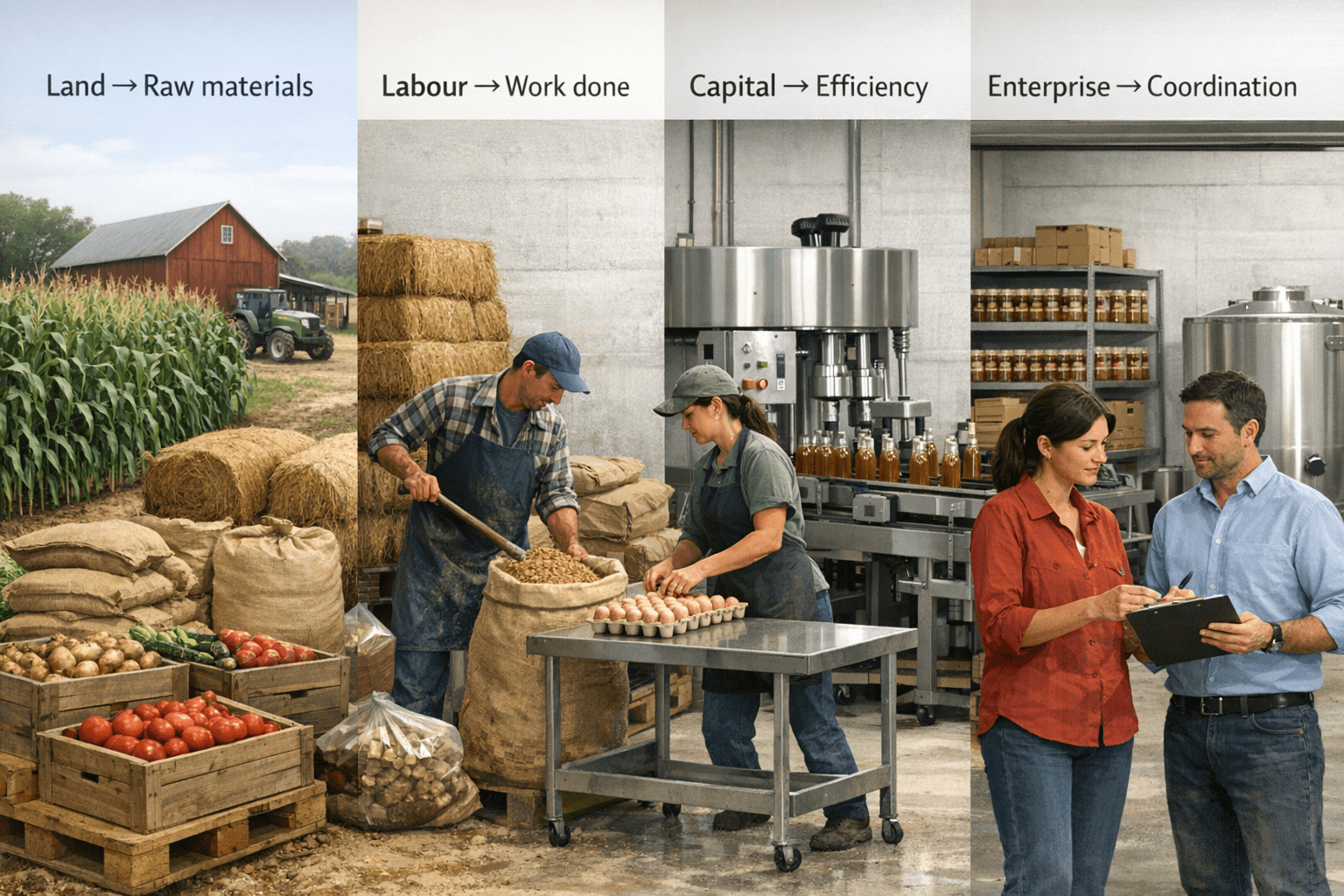
Productivity is the amount of output produced.
Factors improve productivity by:
Land → provides raw materials
Labour → performs work
Capital → increases efficiency
Enterprise → coordinates production
Efficient use increases output and profit.
HIV and AIDS affect labour by:
Reducing workforce
Increasing absenteeism
Lowering productivity
Increasing healthcare costs
Healthy workers are essential for production.
Goods pass through different stages:
Extraction of natural resources
Example:
Farming, mining
Manufacturing goods
Example:
Processing maize into meal
Providing services
Example:
Transport, selling goods
These stages are interconnected.
The chain of production shows how goods move from raw materials to final products.
Farmer grows wheat
Factory processes wheat into flour
Bakery produces bread
Shop sells bread
Each stage adds value to the product.
Question: What is production?
Answer: Creating goods and services.
Question: Give one example of direct production.
Answer: Growing food for own use.
Question: Name one factor of production.
Answer: Labour.
Question: What is the reward for labour?
Answer: Wages.
Question: Name one stage of production.
Answer: Primary production.
Question: What is productivity?
Answer: Amount of output produced.
Production is the creation of goods and services
It can be direct or indirect
Factors of production include land, labour, capital, and enterprise
Sustainable use of resources is important
HIV and AIDS affect labour productivity
Production occurs in stages and follows a chain

